

What I Learned Wearing a Continuous Glucose Monitor Through Perimenopause

Two weeks ago, I put on a continuous glucose monitor (CGM). Not for a client. For me.
As a Nutritional Therapist specialising in women's hormone health, I talk about blood sugar balance every single day. But I wanted to see, in real time, exactly how my own body was responding to food, movement and my current life stage. If you've been curious about what a CGM actually shows and whether it's worth trying during perimenopause, this post is for you.
What Is a Continuous Glucose Monitor?
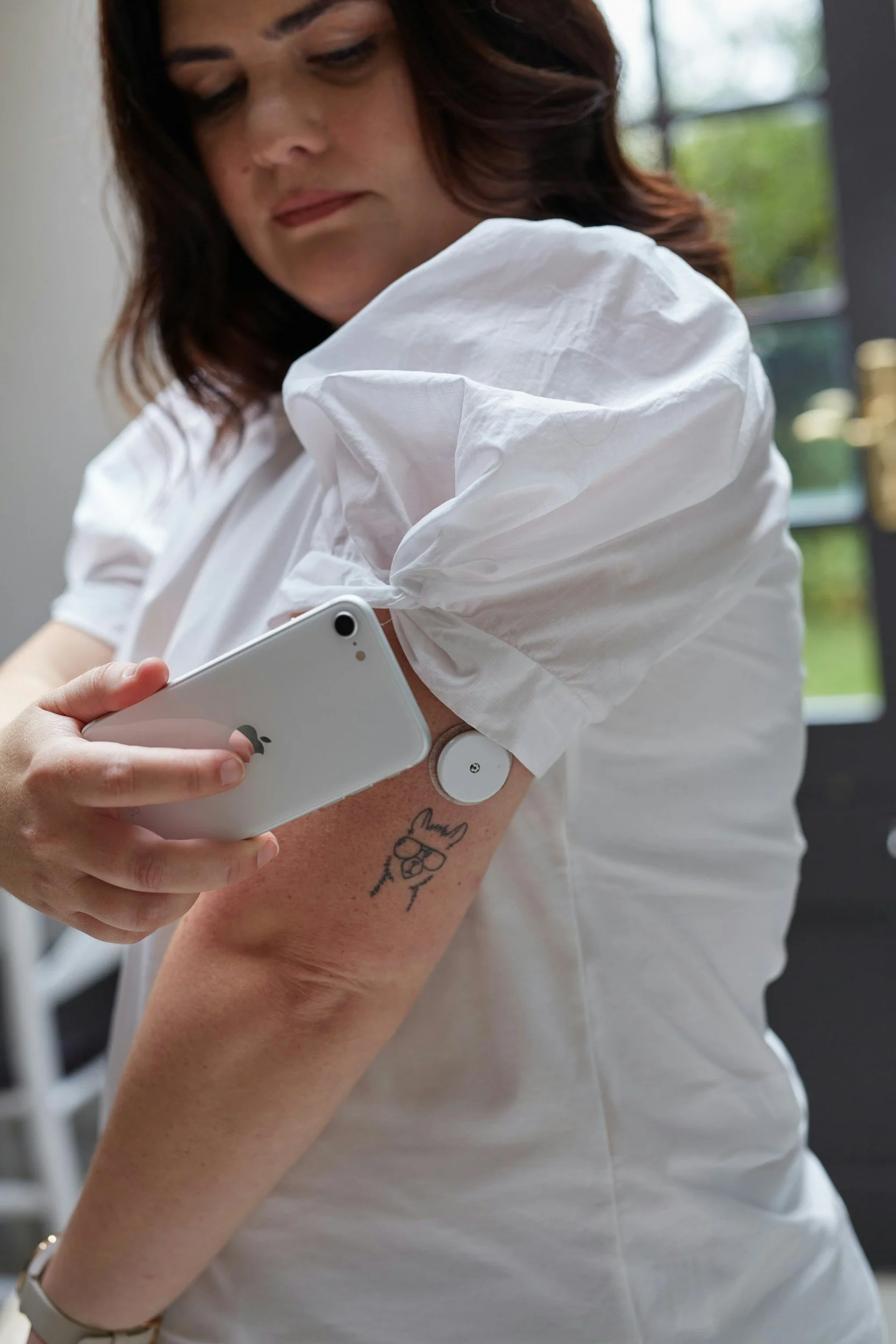
A continuous glucose monitor is a small sensor, usually worn on the arm, that tracks your blood glucose levels throughout the day and night.
Originally developed for people living with diabetes, CGMs have become increasingly popular among people without diabetes who want to understand how their individual body responds to food, stress, sleep and exercise.
Rather than a single snapshot from a blood test, a CGM gives you a continuous picture. You can see, in real time, how a specific meal, a stressful meeting or an afternoon walk actually affects your glucose levels, rather than relying on generic advice about what "should" happen.
Why I Trialled a CGM During Perimenopause
Hormonal fluctuations during perimenopause can have a real impact on blood sugar regulation. As oestrogen and progesterone shift, many women become more prone to blood sugar swings, energy dips and increased insulin resistance. This is something I see constantly in clinic, but I wanted to experience it through data rather than theory alone.
So many of my clients arrive confused by conflicting information, whether it's from social media, generic health articles, or increasingly, AI-generated advice that isn't tailored to their body or life stage. A CGM strips that noise away. It shows you what is actually happening, rather than what might be happening in general.
Three Key Learnings From My CGM Trial
1. My Luteal Phase Needs More Food, Not Less
During the luteal phase (the two weeks between ovulation and your period), progesterone rises and metabolic rate typically increases slightly. My CGM data showed clear afternoon energy dips during this phase, and increasing my food intake made a measurable difference.
This is a pattern I regularly discuss with clients, but seeing it play out in my own glucose data was a useful reminder that hormone-aware eating isn't a nice-to-have. It's a genuine, cyclical need.
2. My Lunches Weren't Giving Me Enough Protein
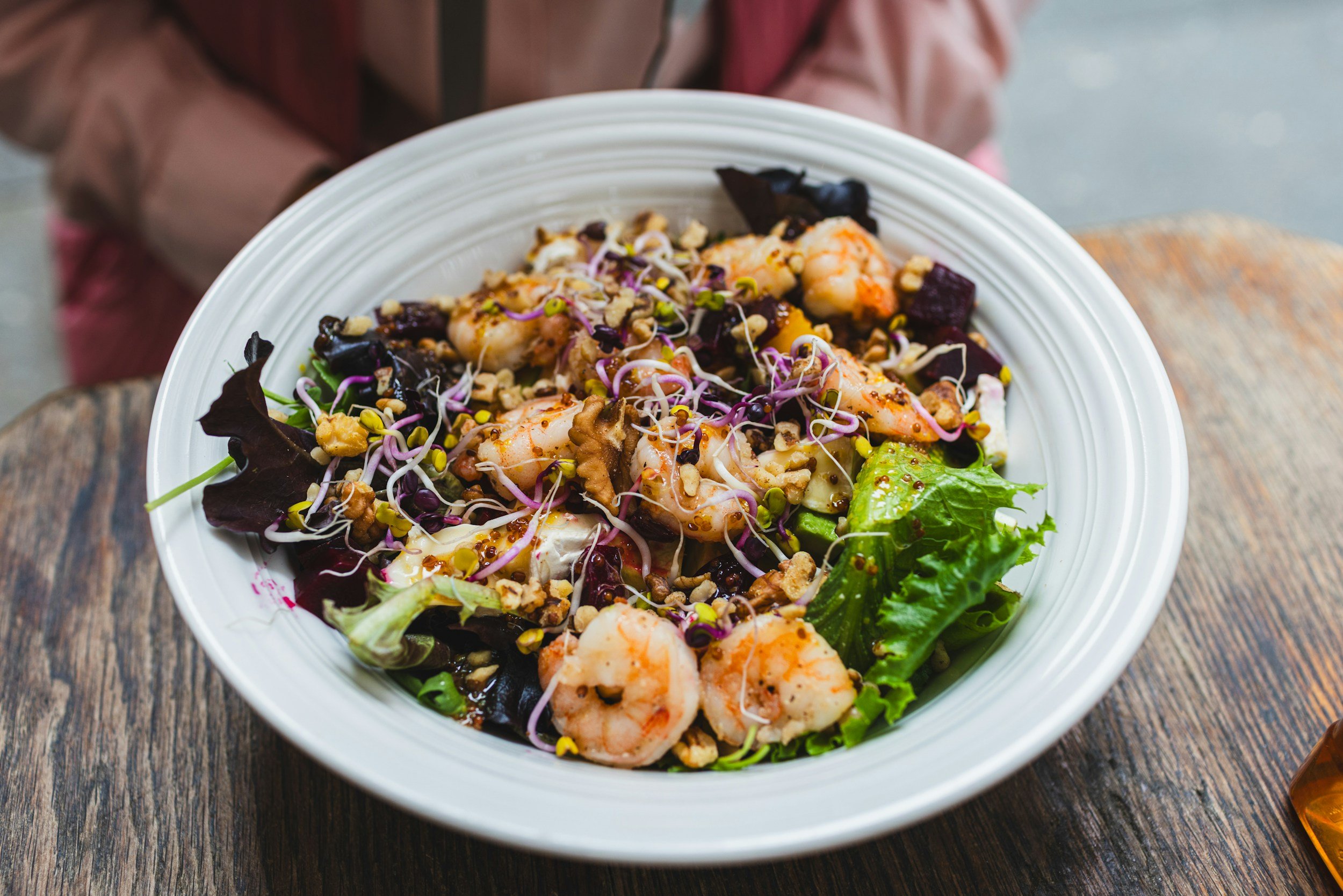
My breakfasts and dinners have consistently included a solid protein source. Lunch, particularly through the recent warm weather, had quietly slipped. Salad with beans and feta, or houmous with crudites, felt light and refreshing, but wasn't enough to sustain steady energy through the afternoon.
Protein plays a central role in blood sugar balance because it slows the release of glucose into the bloodstream, helping to prevent the sharp spikes and subsequent crashes that drive fatigue and cravings. I know this. It's advice I give clients regularly. Knowing something and consistently practising it, particularly during a busy or hot week, are two different things, and that's worth being honest about.
What I'm changing: adding tofu or tempeh, more beans and legumes, or a protein-boosted Greek yoghurt as a mid-afternoon addition to keep lunch working harder for me.

3. My Critical Window Is 1pm to 2pm
This was the most useful finding of the entire trial. A short period of movement straight after lunch, whether that's a walk, a standing call, or simply not sitting still, made a measurable difference to how my blood glucose responded, and to how I felt for the rest of the day. No afternoon slump. No waves of fatigue.
Movement after eating helps muscles take up glucose from the bloodstream more efficiently, which can reduce post-meal blood sugar spikes. As a result, I've restructured how I work. Focused, desk-based work now happens in the morning, when I need to concentrate. After lunch, I build in movement deliberately: taking calls or webinars while walking, using a standing desk for admin tasks, or fitting in a short walk. Anything that means I'm not sitting and slumping through that post-lunch window.

Every Body Is Different
The biggest takeaway from this trial isn't a universal rule. It's the opposite. My critical window might not be yours. Your luteal phase needs might look completely different from mine. That's exactly why generic advice, whether from a blog, an influencer or an AI chatbot, so often falls short. It can't account for your cycle, your stress levels, your sleep, or your specific metabolic patterns.
A continuous glucose monitor won't replace working with a qualified practitioner, but it is a genuinely useful tool for building self-awareness and testing what actually works for your body, rather than guessing.
Curious About Trying a CGM Yourself?
If you're navigating perimenopause and want to understand what's really driving your energy dips, cravings or afternoon slumps, I'd love to help you explore what a CGM, alongside personalised nutritional therapy, could reveal about your own patterns.
Get in touch to find out more or explore my 1:1 programmes to see how we could work together.
Put yourself back on the priority list. x
